Dental X-Ray Room Design: Essential Radiation Shielding and Space Requirements

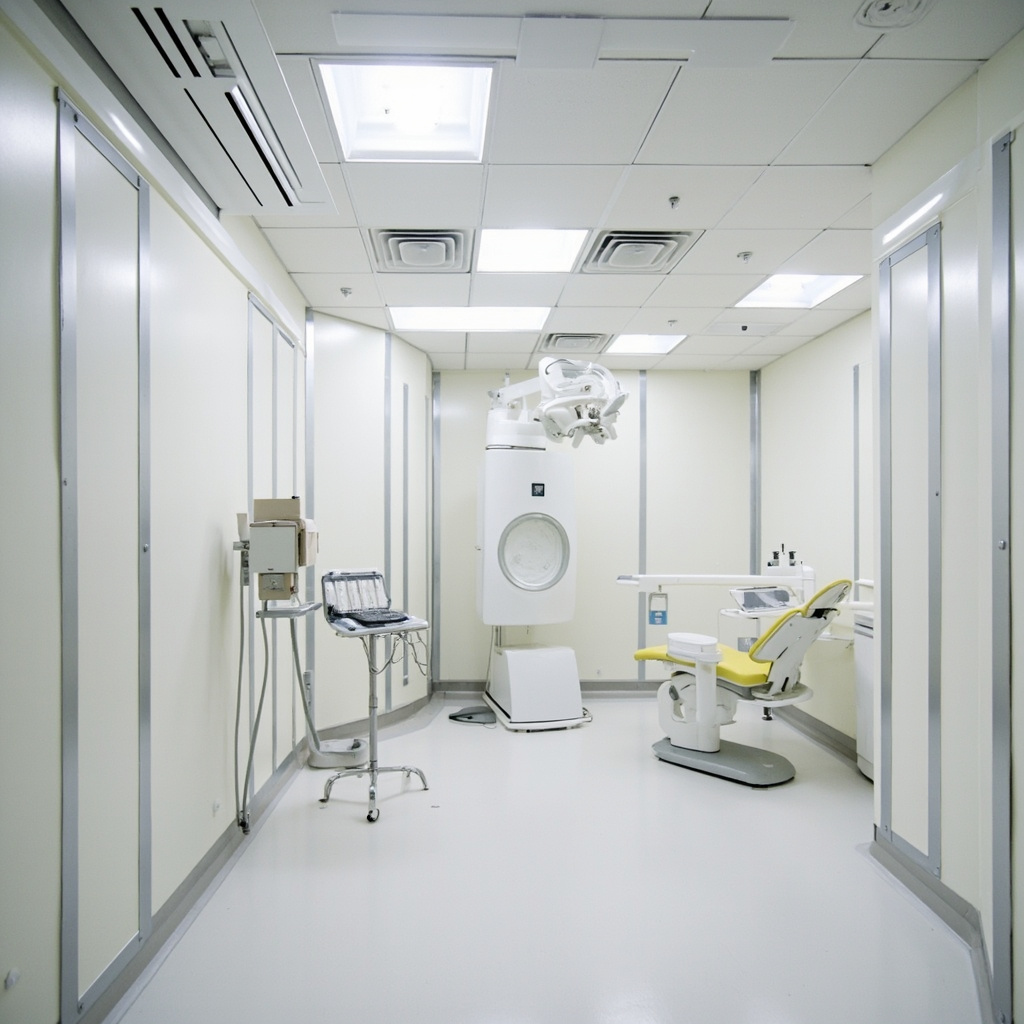
Designing a compliant dental X-ray room requires careful attention to radiation shielding requirements, space allocation, and safety protocols. Modern dental practices must balance functionality with regulatory compliance to create safe, efficient imaging environments.
Essential Space Requirements
Dental X-ray rooms typically range from 8×8 feet to 12×12 feet, with specific minimum dimensions mandated by state regulations. The operator control area must provide at least 7.5 square feet of unobstructed floor space, with no dimension less than 2 feet. This ensures adequate space for safe equipment operation and emergency movement.
Room layout should position the X-ray unit to minimize primary beam direction toward occupied areas. Consider workflow patterns, patient wheelchair accessibility, and equipment maintenance access when finalizing the design.
Radiation Shielding Fundamentals
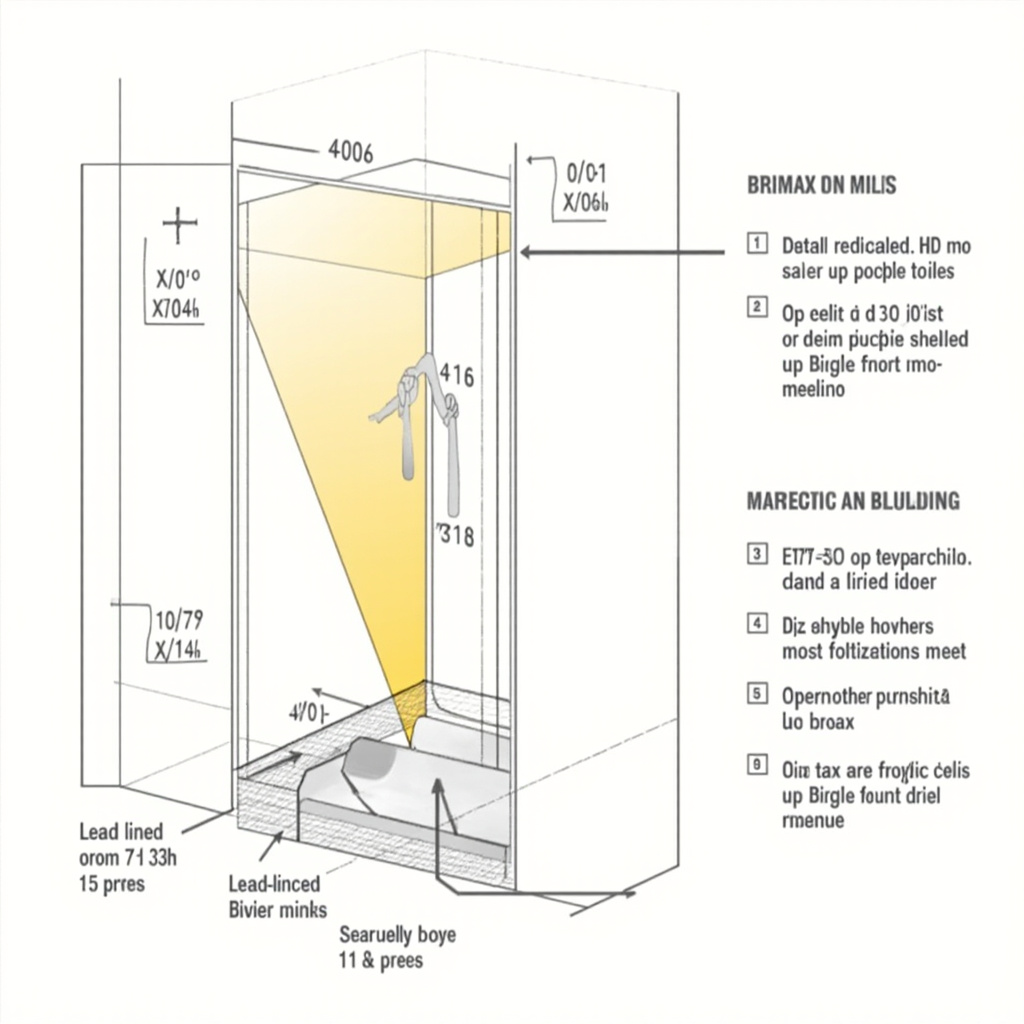
Unlike medical X-ray rooms requiring 1mm or more lead equivalence, most dental installations need minimal structural shielding. Standard gypsum wallboard often provides adequate protection for intraoral systems due to the lower radiation output and shorter exposure times.
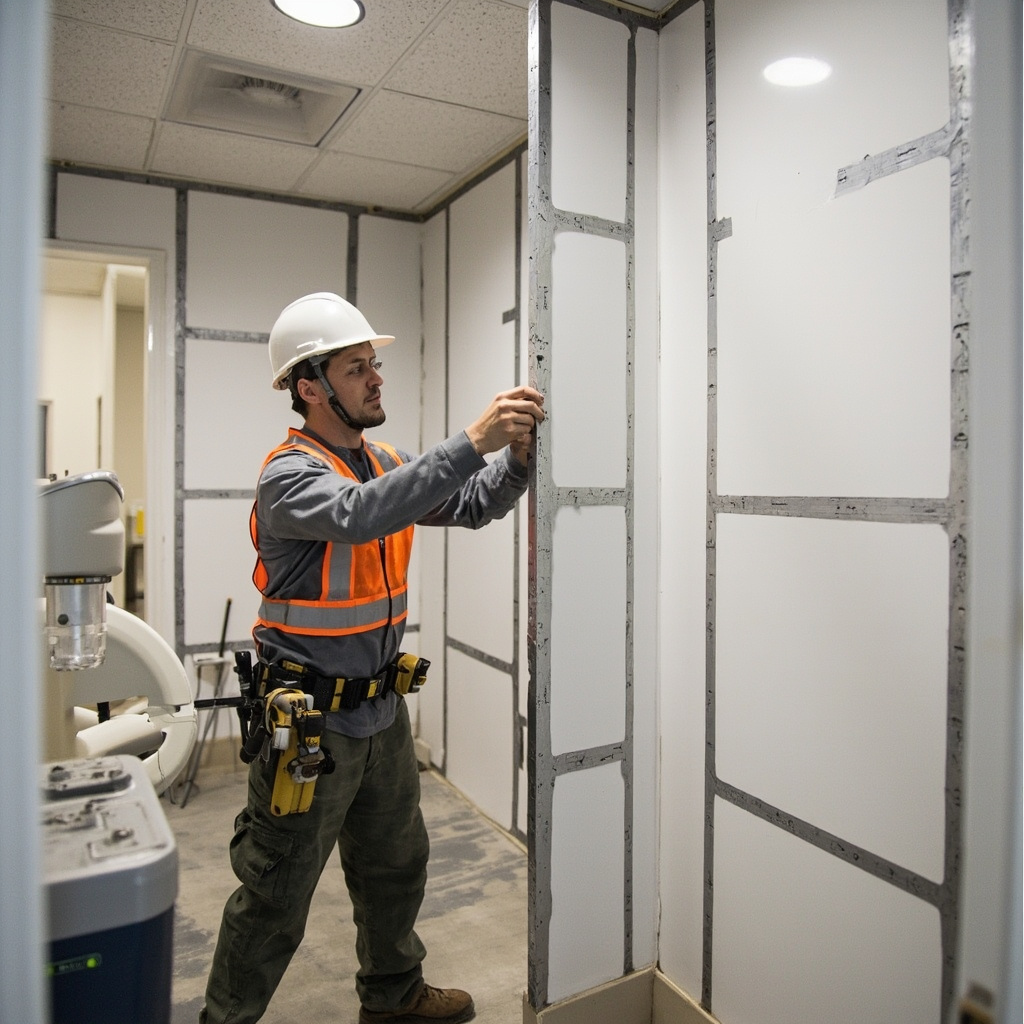
However, panoramic units and CBCT systems may require additional shielding measures. Primary barriers must block the direct beam path, while secondary barriers protect against scatter radiation. Knauf Safeboard, featuring 0.5mm lead equivalence, serves as an effective alternative to traditional lead-lined panels in many dental applications.
Key Shielding Considerations
- Analyze adjacent space occupancy levels
- Calculate workload and use factors
- Evaluate structural materials and thickness
- Consider beam direction and scatter patterns
- Account for equipment-specific radiation outputs
Operator Protection Strategies
When structural barriers aren’t feasible, operators must maintain safe positioning during exposures. The NCRP recommends standing at least 2 meters from the primary beam path, preferably at angles between 90 and 135 degrees to the beam direction.
Control booth design should provide complete protection while maintaining visual contact with patients. Leaded glass windows must match surrounding barrier protection levels, and door interlocks should prevent accidental exposures.
Regulatory Compliance and Documentation
Most states require shielding plan reviews before equipment installation. These submissions must include floor plans, construction details, adjacent space use factors, and radiation safety calculations. Working with qualified radiation safety consultants ensures compliance with local regulations and optimal protection levels.
Regular radiation surveys after installation verify that actual exposure levels meet design specifications and regulatory limits. Documentation of these surveys supports ongoing compliance and helps identify any needed modifications.
Design Best Practices
Modern X-ray room design emphasizes flexibility and future adaptability. Consider these proven strategies:
- Install adequate electrical capacity for future equipment upgrades
- Design modular shielding systems for easy reconfiguration
- Include proper ventilation and climate control systems
- Plan for digital imaging network infrastructure
- Ensure compliance with disability access requirements
Thoughtful X-ray room design protects patients and staff while supporting efficient clinical workflows. By understanding shielding requirements, space constraints, and regulatory standards, dental practices can create imaging facilities that serve their needs for years to come.