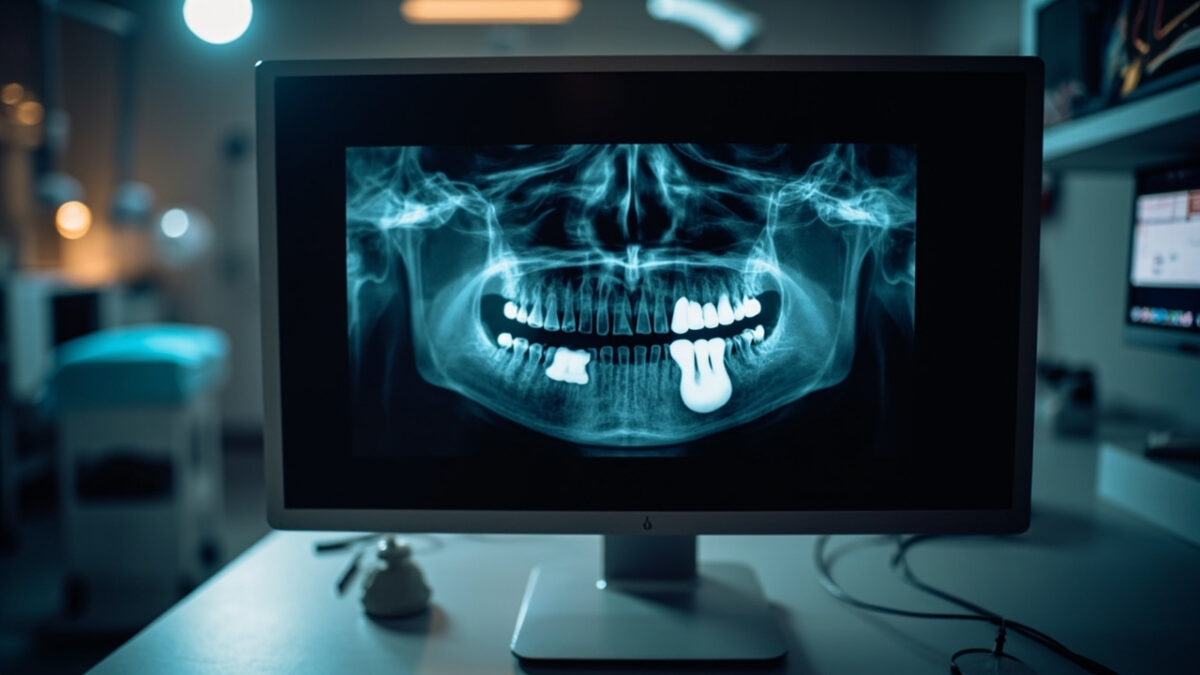
Even the most experienced dental professionals encounter image artifacts that compromise diagnostic quality. Whether you are working with traditional film, digital sensors, or phosphor storage plates (PSP), understanding the causes of common X-ray artifacts — and knowing how to correct them — is critical for accurate diagnosis and efficient workflow. This guide covers the most frequently encountered dental X-ray artifacts, their root causes, and practical troubleshooting steps.
What Are X-ray Artifacts?
An artifact is any feature that appears on a radiographic image that does not represent actual patient anatomy. Artifacts can mimic pathology, obscure important diagnostic information, or simply degrade image quality to the point where a retake is necessary. Every retake means additional radiation exposure for the patient and lost chair time for the practice, making artifact prevention a priority.
Patient Positioning Errors
Positioning errors are among the most common causes of artifacts in intraoral and panoramic X-ray imaging.
Cone Cutting
Cone cutting occurs when the X-ray beam is not properly aligned with the sensor or film, resulting in a clear unexposed area on the image. This is immediately recognizable as a sharp, curved border between the exposed and unexposed portions of the image.
Troubleshooting: Ensure the position-indicating device (PID) is properly aligned with the sensor holder. Using beam-alignment devices (such as XCP or Rinn holders) significantly reduces cone cutting. Take a moment to verify alignment before each exposure.
Elongation and Foreshortening
Elongation makes teeth appear longer than they actually are, while foreshortening makes them appear shorter. Both result from incorrect vertical angulation of the X-ray beam relative to the sensor and tooth.
Troubleshooting: Elongation occurs when the vertical angle is too shallow (insufficient angle). Foreshortening occurs when the angle is too steep. Using the paralleling technique with proper beam-alignment instruments helps maintain consistent and correct angulation.
Overlapping
Overlapping of interproximal surfaces makes it impossible to evaluate contact areas for caries — defeating the primary purpose of bitewing X-ray images.
Troubleshooting: Overlapping results from incorrect horizontal angulation. The central ray must be directed through the contact points perpendicular to the interproximal surfaces. Adjust the horizontal angle so the beam passes cleanly between the teeth of interest.
Panoramic X-ray Artifacts
Panoramic radiography introduces a unique set of positioning-related artifacts due to the rotational nature of image acquisition.
Ghost Images
Ghost images are blurred, magnified duplicates of radiopaque objects (such as earrings, necklaces, or cervical spine vertebrae) that appear on the opposite side of the image from their actual location. They are created when a dense object is located between the X-ray source and the center of rotation.
Troubleshooting: Remove all metallic jewelry, eyeglasses, hearing aids, and removable dental prostheses before exposure. Ensure the patient’s cervical spine is straightened (chin slightly tucked) to minimize vertebral ghost images.
Patient Positioned Too Far Forward or Back
When the patient’s anterior teeth are positioned too far forward relative to the focal trough, they appear narrowed and blurred. If positioned too far back, the anterior teeth appear widened and magnified.
Troubleshooting: Use the bite guide and light positioning indicators on the panoramic unit. Ensure the patient bites the notch on the bite block with their upper and lower incisors edge-to-edge. Follow the manufacturer’s positioning protocol carefully.
Digital Sensor Artifacts
Digital imaging systems introduce their own category of artifacts that are distinct from those seen with traditional film.
Dead Pixels and Lines
CCD and CMOS digital sensors can develop dead or stuck pixels that appear as consistent black or white spots on every image. Damaged sensors may also show lines or bands across the image.
Troubleshooting: Run the sensor’s built-in calibration tool if available. If dead pixels or lines persist, the sensor may need professional repair or replacement. Handle sensors carefully to prevent damage — never drop, bend, or crush them.
Cable and Connection Issues
Damaged USB cables or loose connections can produce intermittent artifacts including image noise, partial image capture, or complete image failure. These issues may be mistaken for sensor damage.
Troubleshooting: Inspect the cable for visible damage, especially near the sensor housing where strain is greatest. Try a different USB port. If using a USB hub, connect directly to the computer instead. Replace cables that show signs of wear.
Phosphor Plate (PSP) Artifacts
Phosphor storage plates present their own unique artifact challenges.
Residual Image (Double Exposure)
If a PSP plate is not fully erased before reuse, a faint ghost of the previous exposure can appear superimposed on the new image. This is one of the most common PSP artifacts.
Troubleshooting: Always erase PSP plates on a light box or in the scanner’s erase cycle before each use. If plates have been stored for an extended period, erase them before first use to clear any accumulated background radiation exposure.
Scratches and Surface Damage
PSP plates are delicate. Scratches on the phosphor surface appear as fine white lines on the processed image. These artifacts are permanent and worsen over time.
Troubleshooting: Handle plates by the edges only. Use protective barrier envelopes during intraoral placement. Inspect plates regularly and retire any that show visible surface damage. PSP plates have a finite lifespan — most manufacturers recommend replacement after a set number of scan cycles.
Exposure Setting Errors
Incorrect exposure parameters produce images that are too dark (overexposed) or too light (underexposed). While digital systems offer some latitude for post-processing adjustment, severely over- or underexposed images cannot be salvaged.
Troubleshooting: Follow manufacturer-recommended exposure charts based on patient size and anatomy. Adjust kVp and mA settings appropriately for pediatric versus adult patients and for anterior versus posterior regions. Maintain a reference chart at each X-ray unit and train all operators on proper technique selection.
Building a Quality Assurance Program
The best approach to artifacts is prevention. Implement a quality assurance (QA) program that includes regular equipment testing, staff training, and image quality audits. Periodically review rejected images to identify patterns — if the same type of artifact recurs, it points to a systematic issue with technique, equipment, or training that can be addressed proactively.
By understanding the causes behind common dental X-ray artifacts, your team can minimize retakes, reduce unnecessary radiation exposure, and ensure that every image captured provides maximum diagnostic value.